Showing 49–59 of 59 results
Selank
Description:
Selank is a synthetic peptide derived from the naturally occurring immunomodulatory peptide tuftsin. It is studied for its potential effects on the central nervous system, including modulation of neurotransmitters and stress-related pathways. Selank is also associated with immune system regulation and neuroprotective mechanisms in research settings.
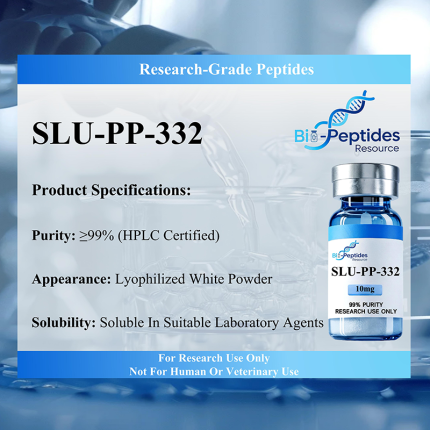
SLU-PP-332
Description:
SLU-332 (SLU-PP-332) is a synthetic small molecule pan-agonist of estrogen-related receptors (ERRα, ERRβ, and ERRγ), produced through chemical synthesis. It activates ERR signaling pathways that regulate mitochondrial function, oxidative metabolism, and energy homeostasis — pathways typically activated during aerobic exercise. This makes it a valuable tool for studying exercise-mimetic effects without physical activity. SLU-332 is formulated for use in controlled laboratory research environments to investigate metabolic regulation, mitochondrial efficiency, and related physiological adaptations. It is supplied as a solid powder to ensure stability and integrity during storage and handling
Snap-8
Description:
Snap-8 is a synthetic octapeptide produced through controlled peptide synthesis. It is an N-terminally acetylated analog of the C-terminal portion of SNAP-25, structurally designed to competitively inhibit the formation of the SNARE complex. This mechanism interferes with the release of neurotransmitters such as acetylcholine at neuromuscular junctions. Snap-8 is formulated for use in controlled laboratory research environments to investigate cosmetic peptide effects, skin biology, and neuromuscular signaling pathways. It is supplied as a lyophilized powder to ensure stability and integrity during storage and handling.
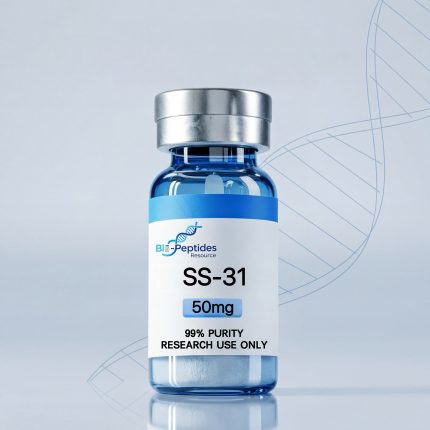
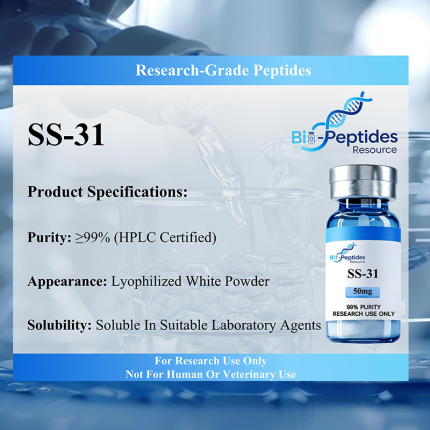
SS-31
Description:
SS-31 (Elamipretide) is a mitochondria-targeted tetrapeptide designed to protect mitochondria from oxidative stress and improve cellular energy efficiency. It selectively localizes to the inner mitochondrial membrane and interacts with cardiolipin to stabilize mitochondrial function, reduce reactive oxygen species (ROS), and enhance ATP production.
SuperHumanBlend
Description:
SuperHumanBlend is a proprietary research amino acid blend formulated with a synergistic combination of essential and conditionally essential amino acids plus supportive compounds. Produced through controlled synthesis and blending, it includes nitric oxide precursors (L-Arginine, L-Citrulline, L-Ornithine), growth hormone-supporting agents (L-Lysine), recovery-focused amino acids (L-Glutamine, L-Proline), endurance enhancers (L-Taurine, L-Carnitine), and the antioxidant NAC. This advanced formulation is designed for controlled laboratory research to investigate performance optimization, metabolic regulation, muscle recovery, and cellular protection. It is supplied as a lyophilized powder to ensure stability and integrity during storage and handling.
TB-500
Description: TB-500 is a synthetic peptide derived from Thymosin Beta-4. It is widely used in biochemical and molecular research to study peptide-receptor interactions and signaling pathway mechanisms. In controlled laboratory settings, TB-500 is commonly investigated for its involvement in peptide-associated signaling, intracellular pathway analysis, and structure-function characterization under defined in vitro conditions. This material is supplied as lyophilized powder and is intended strictly for in vitro research and analytical applications.
Tesamorelin
Description:
Tesamorelin is a synthetic analog of growth hormone-releasing hormone (GHRH) designed to stimulate the endogenous production and pulsatile release of growth hormone (GH). By activating GHRH receptors in the pituitary gland, it supports downstream increases in insulin-like growth factor-1 (IGF-1) and influences metabolic processes related to fat distribution and body composition.
Thymosin alpha-1
Description:
Thymosin Alpha-1 (Tα1) is a naturally occurring peptide originally isolated from thymus tissue. It plays a central role in modulating the immune system, promoting T-cell maturation, and enhancing host defense mechanisms. In research, Tα1 is widely used to study immune regulation, antiviral responses, and immunomodulatory pathways.
Tirzepatide
Description: Tirzepatide is a novel dual incretin receptor agonist that targets both glucose-dependent insulinotropic polypeptide (GIP) and glucagon-like peptide-1 (GLP-1) receptors. It is designed to support metabolic regulation by enhancing insulin secretion, reducing glucagon levels, delaying gastric emptying, and promoting satiety. Its dual-action mechanism differentiates it from traditional single-pathway GLP-1 analogs.